

I spent fifteen years waiting to be noticed.
Now I am the person doing the noticing, and I can tell you exactly what I see from my side of the hiring table.

At my first job I was lucky enough to watch Steve Jobs in action.
As a teenager, I started working at Apple as a Theater Presenter at the SoHo store in New York. One day Steve Jobs (my boss’s, boss’s, boss’s, boss’s boss at the time) toured the location. He wasn’t there to revel in the design, or see how his products were selling. Instead, I observed him obsessing over details that most people would never see. Whether the skylight was spotless. And the condition of each of the glass stairs, which wore down over time (we needed to replace them quarterly as one of the highest traffic retail locations in the world).
It seemed absurd at the time. I thought, “Doesn’t he have a billion dollar company to run?”. But in reality, it’s the most useful thing I ever observed a business leader do.
Every one of those details was a touchpoint. Not decoration. Evidence that somebody had thought about you before you arrived.
That is exactly how a resume and an interview work. Trust is not built by the big claim. It is built by the specific detail that proves somebody actually did the thing.
I used to believe what a lot of capable people believe. Company loyalty = success.
That loyalty, long hours, and good work would eventually speak for themselves. That someone would notice.
Eventually a senior design role opened up at the company I had given most of my career to. I flew out to the Bay Area for it. I had a beautiful resume that took days to design. I sat through the interviews and improvised more of it than I should have.
They went with someone already on their team.
Then came the part that actually did the damage. About a month of silence. No feedback, no reason, nothing to learn from and nothing to fix.
I had spent a career building brand strategy for other people and I had never once done it for myself. I was waiting to be noticed, and waiting is not a strategy.

So I stopped designing for myself and started marketing to my audience.
I took the same strategy I had used for brands and pointed it at my own career. What was I actually selling. Who was buying. What did they need to see in the first six seconds.
I rebuilt the resume as a marketing document rather than a record of employment. I worked out what I valued and let that run through every answer. I stopped applying to everything and started targeting the roles that fit.
At the time I was in a role paying a little over $70,000. Within two weeks I was getting screening calls for roles paying $180,000 and up.
Individual results vary. This describes my own experience and is not a prediction of yours.
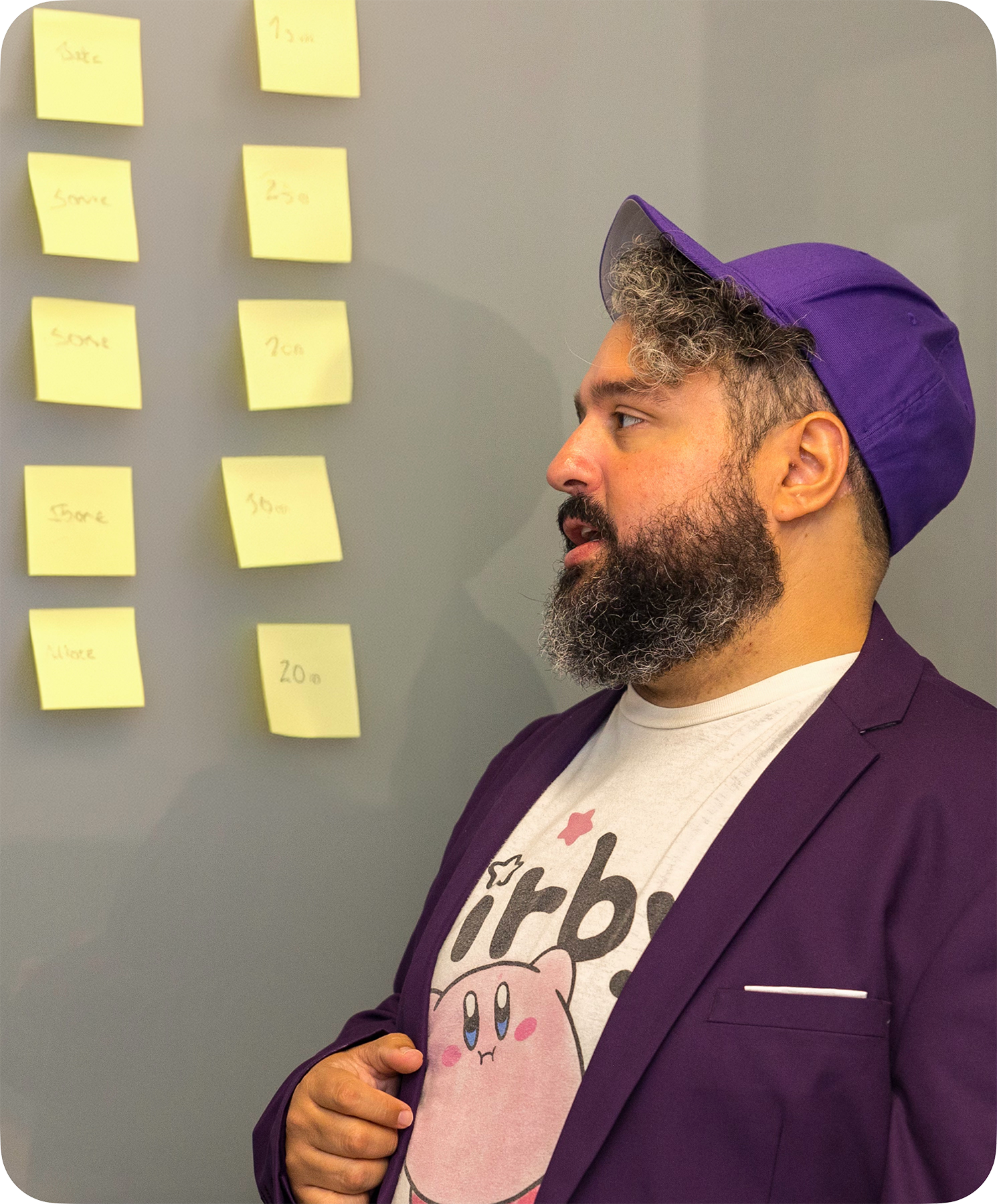
I help people put their value back on the page, and into how they pitch themselves.
I am a career coach and a creative executive who’s been hiring almost nonstop since 2020. I have built teams at Apple and Salesforce, read thousands of resumes, and sat on the panels that decide who ends up on those teams.
That is the whole difference. I am not describing what hiring managers want based on what I read somewhere. I am telling you what happens in the room, because I am in it.
I have helped more than 3,000 professionals learn to market themselves in a market that gives almost no feedback. Some of them have landed roles in as little as 30 days. Most searches take longer in this market, and my goal is to help you shorten yours.

Then I moved to the hiring side of the table, and I found out what was really going on.
I was hiring for a Senior Art Director role at a top tech company. The posting drew more than four hundred applicants in two days.
People started reaching out to me directly on LinkedIn. Resume attached, short message, hoping for a conversation. Most hiring managers do not make time for that, and I understand why. There were too many.
But I kept looking at their materials and thinking: this is not right for the role. And then a second thought showed up that I could not shake. They clearly think they are right for it. So either they are wrong, or I am missing something.
So I gave ten of them thirty minutes each. Not about the job. About them. I asked them to make their case.
Every one of them was talented. Most of them could probably have done the role.
And not one of their most important wins were on their resume, in their portfolio, or on their LinkedIn.
They were all waiting. Waiting for the conversation. Waiting for someone to ask the right question so they could finally explain what they had actually done.
That conversation almost never happens. Four hundred applicants and roughly ten screening calls means the paperwork decides, and the paperwork was leaving out the entire reason to hire them.
That is when I realized I was not looking at a talent problem. I was looking at a translation problem. And having sat on both sides of it, I had the cheat sheet.

I got you, if you’re ready to put in the work.
This is a challenging market and a long search does real damage to how you see yourself, and I take that very seriously. If you want to work together, it’s important that you have a growth mindset about the job market, are willing to learn how to sell yourself, and are strategic about how you look for jobs.
When we work 1-on-1, you’ll get my expertise, but accountability is most of what you are paying for. The knowledge matters. But what shortens your search is applying the frameworks.
So I will be kind about the situation and direct about the work. If I think you’re avoiding a task that would actually move your search and career forward, I am going to say so.

You don’t need a reason to help someone.
Sarah messaged me about an open role I was hiring for. I saw the potential immediately, but potential isn’t something a hiring manager can take a chance on, and I could not move her forward.
So I offered something else. We worked on how she presented herself, curated her wins so the strongest ones were actually visible, and built out her interview answers.
She has since landed roles at Meta and Disney.
Client experiences vary and are not a representation of typical results.
When you’re competing against 250 applicants, your values are the differentiator.
With thousands of coaches for you to choose from, these are mine.

1. Leadership
It is why I coach and why I run workshops. I like helping someone connect the dots, find their value, and change how their search works.

2. Empathy
I think it is the only real way to connect with anyone, whether that is a client or someone who reports to me.

3. Creativity
I love problem solving. Building a product launch narrative at Apple, or rebuilding retro computers at home. The challenge is the same either way: make something complex feel simple.

4. Diversity
People sometimes flinch at the word. I mean something plain by it. Ideas are better when they are built by a group and every perspective carries equal weight.

5. Family
My fiancée and my kids. They are why I try to be the better version of this every day.

Paying it forward.
Through Pledge 1%, part of what this business earns goes to FNE International, a nonprofit building pathways out of poverty through education, healthcare, and community development.
I continue to support their programs in Nicaragua, and I have had the incredible and humbling opportunity to travel there and work on their housing, education, and health programs, which have reached thousands of people. Your investment in yourself also becomes an investment in them.
When I do well, you do well, and they do well.
If your search is not working, let me tell you what I see.
A free 45-minute call. You talk, I tell you what I see, and you leave with two or three specific things to change, so you stand out in a market that gives you no feedback.